Designing Penitence

When asked to list the tenets of good experience design, XDers count out things like “informative, intuitive, engaging, attractive” and they’ll almost always save their pinky point – the grand finale – for “fun.” Whatever the objectives, an experience is generally made richer and more effective if your users have a good time. But what about when fun is the antithesis of what you want to achieve?
Let’s take the prison system for example. Correctional Facilities, Reform Schools and Detention Centers are all pretty up front about their objectives (and not typically too concerned with the “fun factor”):
We’re going to correct you.
We’re going to reform you.
And perhaps the most honest…
We’re just going to detain you.
But let’s go even more old-school: what sort of experience design challenges might a “penitentiary” face? What does that name suggest about the objective of the facility? No matter how hard you try, you simply can’t penitent someone. Penitence has to come from within the user as a result of the prison experience. It’s the classic learning theory challenge – along the continuum of things you can teach someone designed to elicit behavioral change (declarative knowledge, concepts, psychomotor skills, and attitudes), the most difficult outcome to achieve is a genuine change in attitude.
So how would you engineer an experience such that it engenders remorse?
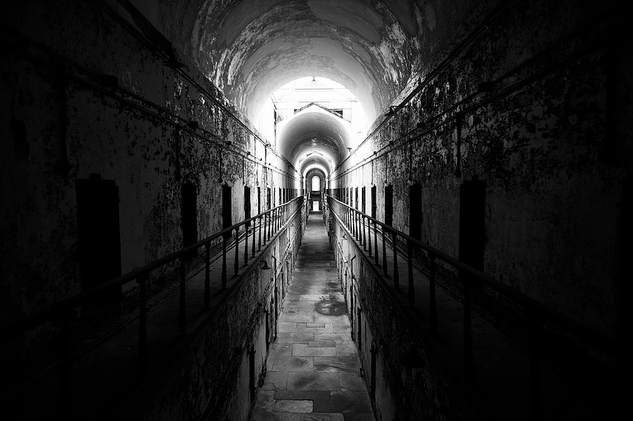
Eastern State Penitentiary (ESP) offers a fantastic glimpse at one attempt to tackle this design problem. First off, if you haven’t visited ESP yet, you should definitely check it out. It’s a fascinating place. Architecture, environmental design, psychology, sociology and a host of other disciplines that now live under the XD umbrella were combined way back in 1829 to form a total user experience designed with the single objective of inspiring penitence. Prisoners were sentenced to solitary confinement, never seeing the face of another human, and subjected to complete silence. But they had natural light in their cells, they were allowed outside regularly, and they were given work to develop valuable trade skills. Think a monastic lifestyle absent the choice.
Ultimately the system failed, succumbing over time to the pressures of increased and improved functionality over the quality of the prisoner experience (sigh). Turns out penitence XD is an expensive business.
But what would you do if you were facing this design challenge today? What role would technology, human factors, cognitive science, theatre, interactive design and all of the other available XD disciplines play in your overall strategy?
We’d love to hear your thoughts, and if it’s a topic that really interests you – some great additional reading is Jim Lewis’s article about rethinking prison design published in the NY Times.



Send us a postcard, drop us a line
Interested in working with us?
We scope projects and build teams to meet your organization's unique design and development needs. Tell us about your project today to start the conversation.