E-Patient Connections Recap

Many of Think Brownstone’s clients are in the Life Sciences industry, so it’s critical for us to keep an eye both on how the industry is changing and on how patients themselves are engaging with healthcare professionals, each other and the industry itself. This isn’t the creepy kind of “let’s read what they’re saying and pose as patients” thing.  It’s a genuine desire to interact with people and learn what their needs and frustrations are, then find ways to close the gap. With that in mind, we try to participate in KruResearch’s e-Patient Connections each year.

It’s difficult to do justice to a 2-day conference in a single blog post, so I’ll hit the main themes I extracted from the sessions. As you know, we are fans of single-track conferences, so I was happy to learn that ePatcon switched back to a single-track model this year. If you want to review everything digitally available from the conference, I’d recommend reviewing their slides in slideshare.

Kicking It All Off

I’m a fan of Seth Godin’s blog and his book Tribes, and I’ve been wanting to hear him speak for a while. Although circuit speakers like Seth have a few standard presentations they pull out for speaking gigs like this, clearly Seth studied the goals of the conference and customized his work for the audience. The main themes:

  • People like doing what other people are doing
  • The general population of a tribe needs a leader
  • Leaders don’t necessarily invent anything, they just show up to lead

These were great messages for the crowd, and something to really think about.

Following Seth was a truly inspiring vocal piece and patient story by Charity Tilleman-Dick, a Soprano who has suffered from several debilitating lung diseases and recently went through a lung transplant. Charity’s inspiring patient journey highlights how important it is for patients suffering from chronic diseases to have a laser-sharp focus on their goals. There really is no better way to kick off a conference that focuses on patients than to have an inspiring patient story.

Dr. Internet?

Data from Manhattan Research and Ron Gutman from HealthTap tells us more and more folks are using the Internet as their #1 health resource. Searching for health research increases as reliance on physicians decreases. Not necessarily a good thing, unless we can shore up the quality of the information people can find.

the e-Patient Bill of Rights

The e-Patient Bill of Rights

In one of the preconference sessions the day before I arrived, a group of e-Patients sat with some industry representatives to begin to spell out what they expect from their digital interactions. The e-Patient Bill of Rights was displayed prominently in the room for users to peruse. Patients want access to their own records, they want efficient communication methods, and they want more trustworthy information.

The Medical Community Reacts

Several presentations from physicians and medical communities showed that there are some progressive movements out there to engage with patients electronically. Julian Bond from the Detroit Medical Center and Ed Bennett from the University of Maryland Medical Center are both doing great things to engage with patients, physicians and medical students through social media channels. While the entire population of physicians have been slow to react to the notion of engaging with patients online, Dr. Kent Bottles and Dr. Bryan Vartabedian of 33charts.com both offered insight into the future of healthcare and the advances of some digitally-engaged physicians. Phil Bauman, a registered nurse from the Mayo Clinic’s center for Social Media discussed several approaches they have taken to pull medical professionals into social media spaces, including engaging in weekly online Twitter sessions under#RNchat and #MDchat.

Industry Lurches Forward

Chris Schroeder of Health Central opened his session asking, “Where are the pitchforks and torches?” – an apt question for everyone in the room. While all trends point to fully engaged e-patients, less-progressive physicians and industries have moved into the digital space at a snail’s pace, often blaming the litigious and regulatory environment. Chris theorizes that true healthcare reform with a strong digital component and a focus on patient empowerment won’t take place until patients scream loud enough.

So, how do we get there? Well, we start following the lead of more progressive organizations like:

  • The Lance Armstrong Foundation, who announced the upcoming launch of their new iPad app for Cancer patients.
  • Gilead Sciences, who discussed the importance of partnering with patient advocates when creating SpeakFromTheHeart.com in conjunction with Mended Hearts, a women’s heart health advocacy group
  • Ignite Health, who discussed merging gaming concepts with health management tools
  • Vgo Communications, who developed an internet-enabled robotic telepresence that allows patients to interact with their communities when they are otherwise unable to leave their homes or care centers

In a fascinating keynote, Harris Rosen from Rosen Hotels and Resorts described how he believed he could do better than what the insurance companies were offering. Today, his company is fully self-insured, covering thousands of lives for a fraction of what it would cost to go through a traditional insurance company. His approach isn’t without controversy (a strict anti-tobacco policy causes employees to undergo nicotine tests along with their drug tests), but it seems to be working.  In the very least, it should give health care professionals and providers pause when they gripe about the system. There are other models emerging.

Patients Are There and Are Waiting… Patiently

Jenni Prokopy of Chronicbabe.com and Kerri Sparling of SixUntilMe.com summarized the SXSH event the day before and kicked off their We Are All Patients campaign by stickering anyone who would let them. Jenni and Kerri are active E-patient advocates and good friends of Think Brownstone. Their campaign’s goal is to close the gap between patients and the healthcare system by reminding us that we all came into this world as patients and we’ll all leave it the same way. An atmosphere led by patients could put us all in a better position to get healthy.

Tell me you don't hum the Dr. Pepper theme song when you see this

While the event opened with the inspiring patient journey of Charity Tilleman-Dick, one of the final sessions was Kelly Young’s devastating struggle with Rheumatoid Arthritis. While Kelly struggled with finding the right specialists and securing the right treatments, she learned a great deal about her patient journey. Kelly manages RAWarrior.com to offer insight to patients with RA.

Kelly offered the following advice for the industry to take to heart as we all work to improve healthcare:

Patients are more involved in their own care than ever before. Taking their input in four areas is a critical component to improving healthcare:

  • Patients could help create new methods to assess disease
  • Patients could help design more effective clinical trials
  • Patients could improve the focus and effectiveness of marketing efforts
  • Patient-generated data could improve product inserts and warnings

Final Words

This post highlights only a third of the sessions over a two-day conference. Due to time limitations, I skipped a number of engaging speakers covering important topics. For me, the recurring theme throughout the event was that while things are slow to move, change is coming.

Everything To Everyone: Design As A Commodity?

Visit one of your favorite aggregators of design/business articles and do a search for “everything to everybody”, and you’re sure to get an interesting set of material back. Unsurprisingly, what you read won’t be touting the benefits of such a strategy; it’ll be a lot of cautionary tales and advice around focusing on and exploiting your core strengths. But when you’ve got a shop full of really smart, well-rounded folks with colorful skill sets and employment histories…and when you’re frequently asked by clients (to whom you’ve proven your mettle) to tackle wide-ranging projects for them, and succeed, it’s easy to backslide into thinking you can indeed do it all.

Actually, wait a sec…since there’s a part of me that sincerely believes our team really can do it all (owing a lot to our process)…let me rephrase: it’s easy to backslide into telling others who don’t know you very well that you can indeed do it all.

I can tell you from experience that in this situation, the smart folks on the other end of the table will challenge you – and they are right to do so. I should clarify that I believe that our process and our method of design thinking is useful for solving all kinds of diverse and complex problems; some of which we can tackle ourselves start to finish, and some of which we serve better by being part of a broader cross-functional team. That’s a lot different from trying to be, or thinking we can be, “everything to everyone.”

"Yep, We Do That Too"

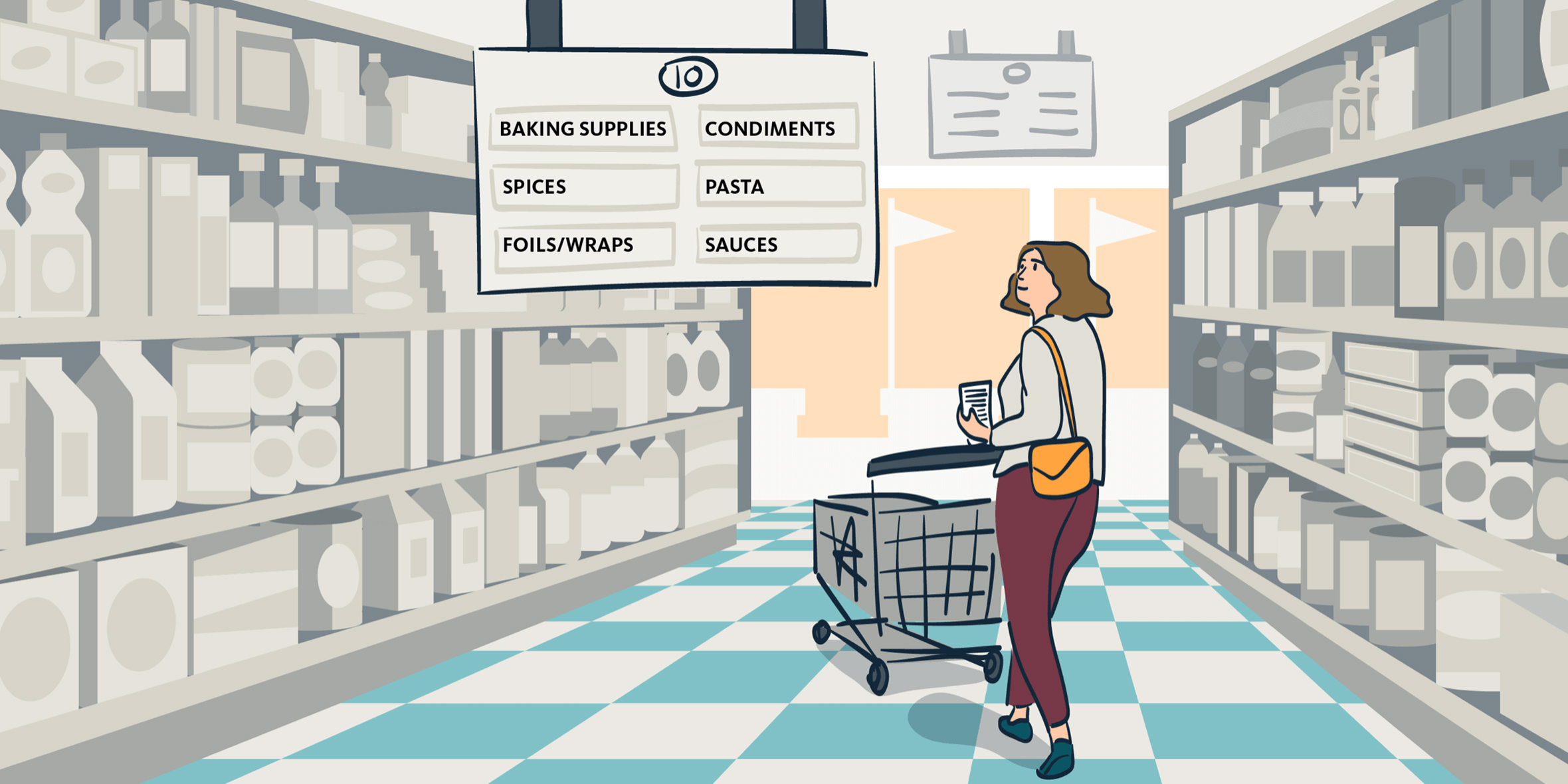
As consumers, sometimes we are willing to accept the “one stop shop” in our daily lives – an obvious example is the superstore. But when do we accept this? When we are willing to go with the safe, the generic, and the bare minimum of service and attention to detail for the sake of saving time and a few dollars. Sometimes there’s nothing wrong with that, it just depends on whether or not it aligns with your goals. If my family is staying with me over the holidays, I might indeed stock up on paper goods at Giant, because they’re a commodity (to me, anyway – but you may disagree and insist on exclusive use of toilet paper woven by Korean silkworms). But if I want to have good bagels for the New York contingent in the morning (note: nothing you buy in a package has the right to be even classified as a “bagel”), I need to go to a local shop where they make them fresh every morning and not just by punching holes in kaiser rolls.

But let’s up the stakes, and talk about our homes – where most of us have higher standards. If I’ve got the plumber over for an estimate and he happens to notice a small piece of drywall missing and says “hey, I can patch that up for you while I’m here if you want” – I might be inclined to say “yeah sure, that sounds great!” Low stakes, I don’t need to be too discerning, and it’s very convenient. But if I’ve got a few rooms stripped back to the studs and he says “hey, I can drywall all of that for you if you want, run the electric, re-point that fireplace, and fix that antique stained glass for you”, the stakes are a lot higher, I need that stuff done right, and it’s going to take a lot of scrutiny to convince me that he’s really an expert at each of these things let alone the right guy for the job.

So, back to experience design – we’ve been developing some really fantastic partnerships lately, with folks who understand this reality. Many of the places we have partnerships with have small internal UX groups – and for the small patch jobs, they’re more than equipped for the task. But when it comes to heavy lifting, high stakes, enterprise-wide UX work – they know it’s time to get us on the horn. Similarly, when it comes to high level HTML and CSS templates or digital assets that require minimal coding, etc., we’re internally equipped for the task. When it comes to the back end of dynamic CMS-driven applications, HD iPad apps, and other high-tech development, it’s better for us and our clients to call in our dedicated partners.

In theory, a bunch of these focused businesses could be pulled together under a single umbrella and effectively become a one-stop shop, but I’ve worked places before where that was attempted (and know of a few operating right now as well…) and the reality is that I haven’t seen it implemented in a way where the quality was able to be maintained. Operations, logistical overhead, and the inevitability of layers of management overseeing skill sets they don’t remotely understand always seems to result in…well, superstore quality output.

So in the end it just comes back to what you’re trying to achieve…what kind of experience do you want for your customers? What kind of experience do you want to have when working on that project? Knowing whether you’re in the market for toilet paper or authentic bagels will greatly determine where you go shopping.

Experience Review: The BMW Guggenheim Lab

I’ve been told that I missed my calling as a theatre critic.  Most people walk out of shows and say, “Well that was nice.  Where should we go for dessert?”  Not me.  I’m that person who feels compelled to comment on every aspect of the experience, be it good or bad. E-ver-y-thing. That’s probably why I work here.

I was in Manhattan the other weekend and stopped by to check out the BMW Guggenheim Lab, a “mobile laboratory traveling around the world to inspire innovative ideas for urban life.”  While it might not be theatre, it is in fact a stage – with the singular purpose of inviting the audience up onto it to collectively brainstorm ideas for the improvement of urban life; a complex design problem if ever there was one.

So how did it fare? Here’s my official, unofficial review:

Um, Hello?

Entering from Houston street, the BMW Guggenheim Lab has a nice beer garden feel with trees and picnic tables and a chalkboard out front listing the day’s program offerings.  We happened to arrive while a program was underway and found ourselves awkwardly waffling outside, debating between “crashing” the program by walking in or turning around and leaving. Uncertainty led to a sense of unwelcome in a matter of seconds.

Walk into any good restaurant and someone’s there to greet you, make you feel welcome and inspire confidence that this is a place where you want to spend the next hour or so of your life, and you’re not going to get food poisoning.  There was no analogue here, compounded by the fact that as a visitor you aren’t entirely clear what the “lab” even is.  What kind of experience will it provide?  Will it be entertaining?  Are you going to learn anything?  Is anything going to be asked of you?  How long will it take?  Where should you go first?  Is it OK to just walk in?

We stood outside feeling mildly like peeping toms with these and other questions in our heads until I (seeing the glimmer of a blog post) mustered the courage to crash the party and walk in.

Emily at the BMW Guggenheim Lab (2nd From Right): "You keep using that word...I do not think it means what you think it means."

Climbing Over Chairs Is For Weddings

The act of walking in was, in itself, a feat.  The front of the space was loaded with long tables with people huddled around them all engrossed in discussions having something to do with maps and colored pens (we never learned what was going on there).  But to get in, we had to weave through this obstacle course of legs and bags and chairs to arrive at the only landmark I could make out as an official place for information: a podium, with a person standing at it.  Once I reached her, I mumbled something like, “Sorry… is this okay?” I felt like I was interrupting. Like I was in the way.

On the one hand, a crowded room of people earnestly talking about something is a really exciting thing to experience, but it fails if you don’t feel like there’s room metaphorically or even physically for you to join in.

A Breath Of Fresh Air

Next, we crossed a threshold that visually divides the space and entered a completely different realm.  It was open and airy, with people comfortably standing around what appeared to be a chessboard on the floor with sculptural game pieces on it.  It was like emerging from a stuffy, loud banquet room onto a cool veranda where the people you really want to spend time with are hanging out.

We were immediately engaged by a staff person inviting us to play a game.  The game is called Urbanology and you can play it on the Lab’s website.  But what works about it as a live experience is exactly what makes it lackluster as an online experience.  Briefly, Urbanology asks participants 10 yes/no questions on a variety of topics having to do with urban life.  People manning the game pieces (representing innovation, transportation, health, affordability, wealth, lifestyle, sustainability and livability) are asked to respond with their particular issue in mind.  For each question, the majority vote wins and the various game pieces either advance or fall back as a result of the vote.  Along the way, you’re shown the ratio of total votes in favor or against the question that your group just answered.   The game ends by likening the city you’ve created based on the final distribution of the issues on the board to real cities around the globe with similar issue prioritization.

"Urbanology" In Action

What was more fascinating than the game or its results (and why Urbanology as an online single-player game falls short) was how a group of strangers played it together.  Of the approximately 15 people participating, we had a very wide cross-section of ages, races and ethnicities and I’m certain a host of other variables not easily discernible on the surface.  Everyone quickly got into the game.  They offered explanations for their votes.  They asked questions of each other.  They tried to persuade others to see the issue from their perspective. They shared what is important to them.  They listened respectfully.  They engaged.  They gave thought to their position on issues they may have never considered before.  They learned that others, people they might assume were much like them, hold completely different opinions.  They laughed.  They agreed to disagree.  And they respected the majority vote as final. It was democracy in action – albeit a no-stakes version.  Nevertheless, it was a refreshing experience, and reminded me a heck of a lot of the way we design Think Sessions to work.

Unsolicited Design Advice

I can’t say that what I took away from Urbanology was the intended “lesson.” Given the stated purpose of the Lab, my guess is no.  But that’s the beauty of a stage after all, you put something up there and it’s up to the individual audience member to decide what, if anything, they’ll take away from it.

Ultimately, I’d say it was a worthwhile experience cooked up by organizations we admire (though you might want to revisit that website design, guys…) - but if I might make a suggestion: flip the spaces.  Use the game as the entry point, engaging people around the fun they might have spending more time with and learning from the strangers around them.  Then invite those who are hungry for more into the “serious table space” where they can roll up their sleeves, sketch ideas, build off of each other, and – without even being aware of it – participate in the early stages of what is the core of the design process: identifying problems, casting visions, observing and asking, and brainstorming solutions together – another important aspect of democracy in action.